
Who Owns AI Work? EU Parliament Briefing Says Humans Must Lead
A new EU Parliament research briefing says purely AI-made works can’t be copyrighted. Here’s what it means for creators and publishers.
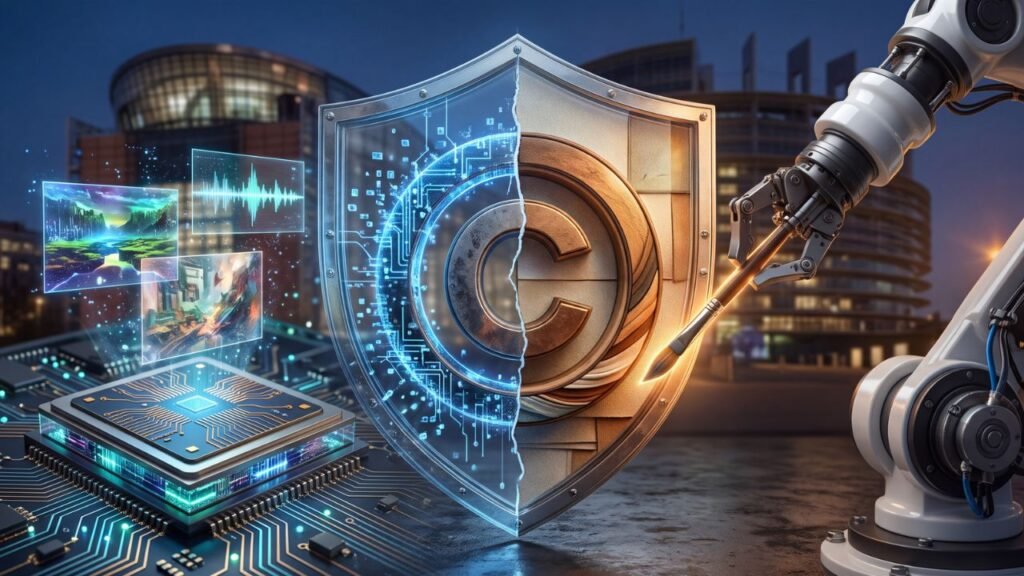
Who owns something an AI made? A new briefing from the European Parliamentary Research Service (EPRS), published on 21 October 2026, says that in Europe the answer still depends on the human behind it.
Note that EPRS is the Parliament’s in-house research service. The briefing is an analysis for lawmakers, not a law or an official Parliament decision.
What the briefing says
EU copyright protects works that reflect an author’s own free and creative choices. Content generated entirely by AI does not meet that test. Work made with AI tools can still be protected if a person made substantial creative choices, but each case is judged separately.
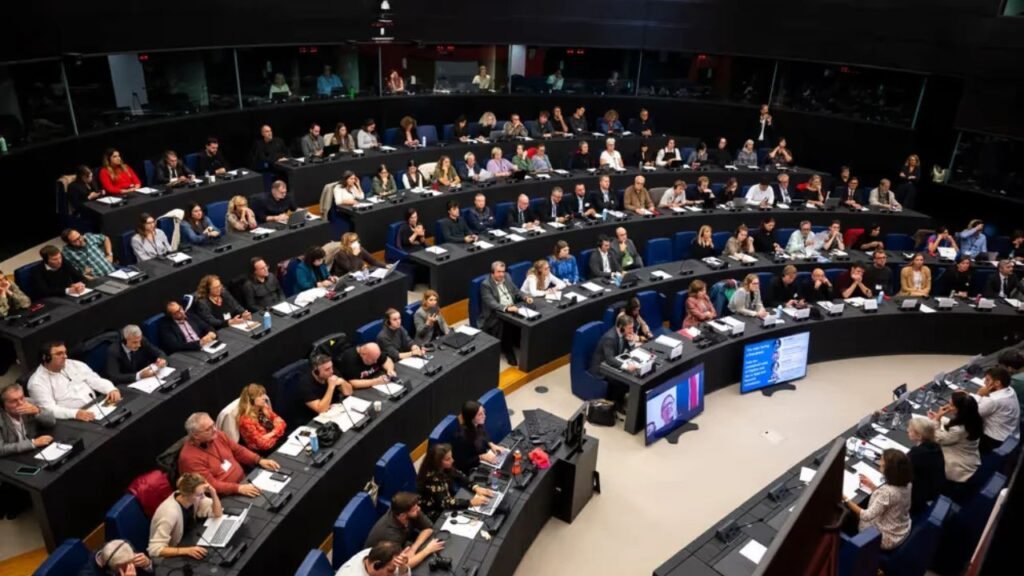
A gap in EU law
The main EU copyright rules (Directive 2019/790) were written before generative AI and say nothing specific about AI outputs. The AI Act doesn’t answer the question either. It does, however, require providers of general-purpose AI models to respect creators who opt out of AI training and to publish a summary of the content used to train their models.
How much human input is enough?
There is no fixed threshold. A single short prompt with no changes is unlikely to qualify. More detailed prompting, plus selecting, editing, and reworking the result, makes a stronger case. A German court in Düsseldorf has reportedly taken a similar view, requiring human creative decisions despite the software-driven process.
Outside the EU
In the US, the Supreme Court declined on 2 March 2026 to hear Stephen Thaler’s appeal, so a machine still cannot be listed as an author. That case involved no human input, so it doesn’t answer how much help from AI is acceptable. The UK is an outlier: its 1988 law protects “computer-generated works” even without a human author.
Pressure on creators
The briefing also notes growing evidence that the flood of AI content has increased competition in creative fields. Because purely AI-made work generally can’t be copyrighted, some users may prefer it to avoid licensing fees. The effects remain uncertain. There is also discussion of paying creators whose work influenced AI outputs, but no criteria exist yet.
What this means for publishers
If you publish AI-assisted articles, images, or music, don’t assume you hold exclusive rights. Others may be able to reuse purely AI-generated material freely. To strengthen your position:
- Edit heavily and add original analysis
- Keep records of your drafts and creative decisions
What comes next
It’s unclear whether the European Commission will revise the copyright directive or propose new rules. A Commission consultation on copyright and technology, including AI, is open until 3 November 2026. Meanwhile, attention turns to how the AI Act is applied in practice.
This article is for information only and is not legal advice.


1 thought on “Who Owns AI Work? EU Parliament Briefing Says Humans Must Lead”