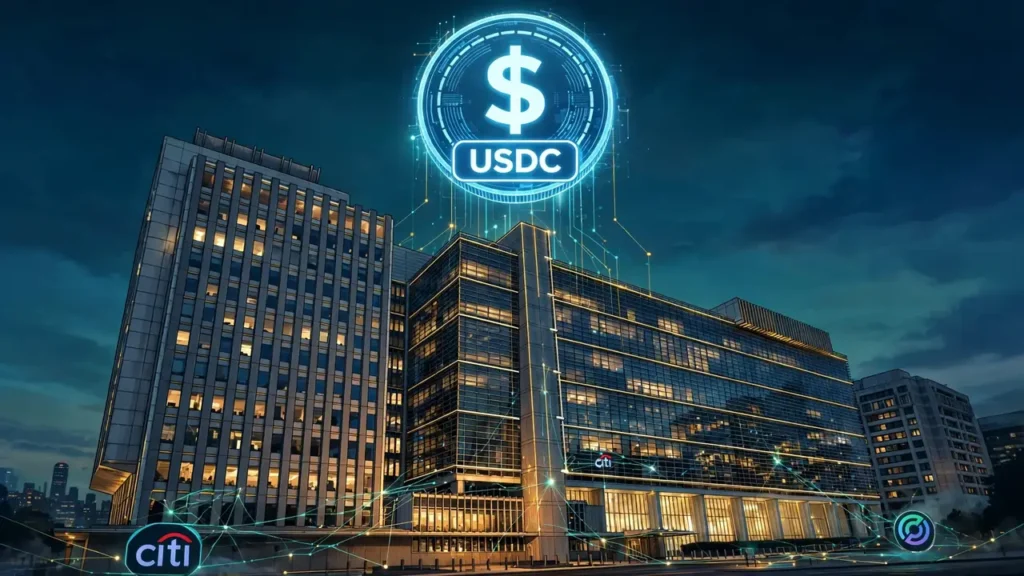
World Bank Explores USDC Payments With Citi and Circle to Move Development Funds Faster
The World Bank Group will explore using Circle's USDC to pay out development funds, with Citi connecting the payments to banking rails. A day later, DBS opened direct USDC minting to institutions in Asia.
At a glance: The World Bank Group said on 17 November 2026 that it will explore using Circle’s USDC stablecoin to pay out development funds, working with Citi and Circle. Circle would mint and settle the money in USDC, while Citi connects the payments to established banking rails. It is an exploration, not a live payment system: no amounts, start date or first countries were announced. A day later, DBS and Circle said eligible institutional clients in Asia can mint and redeem USDC directly through the bank, with settlement running around the clock.
The World Bank Group lends to and funds projects in developing countries, and the way it moves that money has barely changed in decades. Payments travel through correspondent banking, a chain of banks that each take a cut and add a delay before the funds arrive. The World Bank Group announced on 17 November that it wants to find out whether a regulated dollar stablecoin can do the job better, and it named Citi and Circle as the partners for that work.
What the World Bank, Citi and Circle actually agreed to do
The division of labour is clear in the announcement. Circle supplies its stablecoin payments infrastructure to mint and settle funds in USDC. Citi supplies its existing connections to established banking rails, the part that turns a token back into spendable money in a local banking system. The three will look at how dollar stablecoins and blockchain payment rails could work alongside, or improve on, the World Bank Group’s current disbursement arrangements.
The first phase will use what the World Bank Group calls an intermediated and interoperable model, and it will involve borrower countries where using digital assets is supported and permitted. The group also said it will look at working with other banks over time to widen the initiative. Nothing in the announcement gives a start date, a dollar amount, or a list of countries, and no test payments have been reported.
Why development money is slow, and what faster money would change
The case the World Bank Group makes is about scale rather than speed for its own sake. Development lenders work under tight budgets, so even small savings on payment costs add up when they are applied across very large sums. World Bank Group President Ajay Banga put it in practical terms: enabling money to move faster and at lower cost means a health clinic gets built on time and a farmer gets paid before the harvest season ends.
The new work builds on something the World Bank Group already runs. FundsChain, its blockchain platform for tracking how project money is spent, now covers more than 350 projects across 96 countries, letting everyone involved in a project see where funds are going. Adding a stablecoin settlement layer on top of that ledger is the next step the group is now studying. Citi’s head of services, Shahmir Khaliq, said the bank wants to deliver 24/7 capabilities at scale so critical funds move in real time, and Circle chief executive Jeremy Allaire said money that moves at the speed of the internet should reach the people and places that need it most, not just the world’s biggest banks.
What this is not
Three things are worth stating plainly, because announcements like this attract confusion. First, nothing is live yet. The World Bank Group committed to explore, and the release uses that word throughout. Second, there is no World Bank token and no new coin. Any money that moves would move as USDC, a stablecoin that already exists. Anyone offering a World Bank stablecoin, a World Bank USDC payout, or a grant that has to be unlocked with crypto is running a scam. Third, this is about how a global lender pays out funds for its own projects, mainly to governments in developing countries. It is not a consumer product, and it changes nothing for people who already hold USDC.
A second signal arrived a day later from Singapore
The World Bank announcement did not land on its own. On 18 November, DBS, Southeast Asia’s largest bank by assets, and Circle said eligible institutional clients can mint and redeem USDC directly through DBS, with near-instant settlement between dollars and USDC running 24 hours a day. The point of the arrangement, as DBS puts it, is to let institutions get USDC from the issuer through their bank instead of buying it on a secondary market. It is tied to Project BLOOM, the Monetary Authority of Singapore’s public-private settlement initiative, and it is limited to eligible institutional clients. Like the World Bank plan, it discloses no fees, volumes or go-live date.
Taken together, the two announcements show the same pattern from two directions. A development lender wants to test whether stablecoins can carry its disbursements, and a major Asian bank is opening a direct channel for institutions to hold and settle in the same token. USDC’s market capitalisation stood at about $68.9 billion on 18 November, according to CoinGecko, which makes it the second-largest dollar stablecoin after Tether’s USDT. Neither announcement is a reason to buy anything, and USDC is designed to stay at one dollar, so it is not meant to rise in value. What they show is that large institutions now treat dollar stablecoins as payment plumbing, not as a speculative asset.
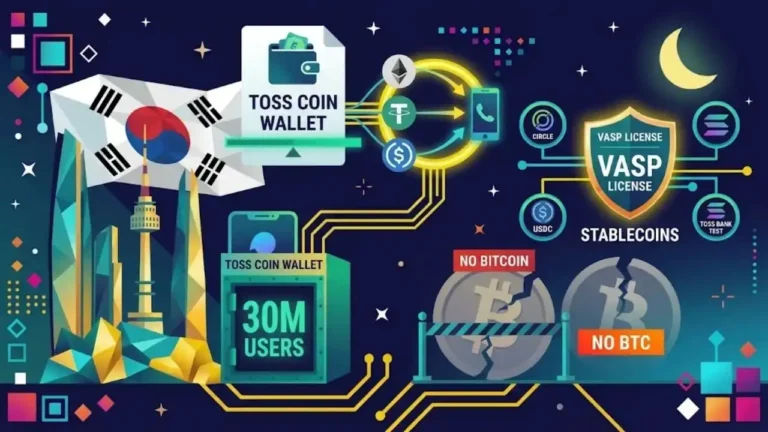
That shift has been building across the year. Traditional finance has been moving onto crypto rails in stages, from Bitcoin ETF holdings disclosed by sovereign funds to tokenized stock products tracking newly listed companies, and now to a development bank testing stablecoin settlement. The spot Zcash ETF filing from Bitwise this week showed the same direction of travel on the asset side. On the consumer side, wallets are following too: South Korean finance app Toss launched a non-custodial wallet for ETH, USDT and USDC for its 30 million users earlier this month.
What to watch
- The first countries: which borrower countries the World Bank Group names for the initial exploration, and whether their regulators sign off.
- A pilot with real money: whether the exploration turns into dated test payments, and how much the stablecoin route actually saves against correspondent banking.
- More banks joining: the World Bank Group said it will look at working with other banks over time, which would tell us whether this becomes a shared standard or a one-off experiment.
- DBS volumes: whether institutions actually use the direct mint and redeem channel, and whether other Asian banks follow with their own.
- Scams borrowing the name: fake World Bank tokens and payout schemes tend to follow announcements like this, so any offer tied to the World Bank name should be treated as fraud.
Is the World Bank paying out funds in USDC now?
Not yet. The World Bank Group announced on 17 November 2026 that it will explore using regulated US dollar stablecoins for payments and settlements, working with Citi and Circle. The announcement gives no start date, dollar amounts or list of countries, and no test payments have been reported.
What would Citi and Circle each do in the World Bank plan?
Circle would supply its stablecoin payments infrastructure to mint and settle funds in USDC. Citi would connect those payments to established banking rails. The first phase would use an intermediated and interoperable model in borrower countries where digital assets are supported and permitted.
What is FundsChain?
FundsChain is the World Bank Group’s blockchain platform for tracking how project money is spent. According to the announcement, more than 350 projects across 96 countries are onboarded to its digital ledgers, letting all parties involved in a project see how funds are being used.
What did DBS and Circle announce on 18 November?
DBS, Southeast Asia’s largest bank by assets, and Circle said eligible institutional clients can mint and redeem USDC directly through DBS, with near-instant settlement between US dollars and USDC running 24 hours a day. It is limited to eligible institutional clients and is tied to Project BLOOM, the Monetary Authority of Singapore’s settlement initiative.
Is there a World Bank stablecoin or token?
No. Any money that moves under the plan would move as USDC, a stablecoin that already exists. There is no World Bank token, and anyone offering one, a World Bank USDC payout or a grant that must be unlocked with crypto is running a scam.