Musk Claim That Space Is the Cheapest Place for AI Resurfaces: Where Orbital Data Centers Stand
A clip of Elon Musk calling space the lowest-cost place for AI is circulating again. Here is where AI data centers in space stand in November 2026.
A clip of Elon Musk calling space the lowest-cost place to put AI is circulating again on X, and the numbers have moved since he first said it. Ten months after he told the World Economic Forum that AI data centers in space would be cheapest within two to three years, the first working prototype is in orbit, and its own maker says it costs far more than building on the ground.
The video was posted again on Wednesday, November 4, by the account DogeDesigner. It comes from Musk’s appearance at Davos in January, not from a new statement.
What Musk said
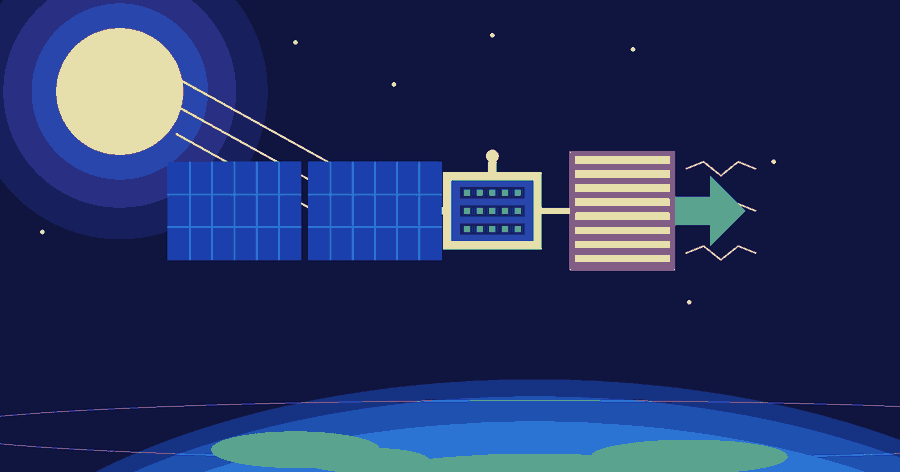
Musk called solar-powered AI data centers in space a “no-brainer.” His argument is that panels can face the sun while a radiator points away from it into deep space, which he put at about 3 kelvin, so the system cools itself. “The lowest cost place to put AI will be space,” he said, adding that this would be true within two years, maybe three at the latest.
ELON MUSK: The lowest cost place to put AI will be space."It’s a no brainer for building solar powered AI data centers in space, you just have solar panels facing the sun & a radiator that’s pointed away from sun, then it’s just cooling. The lowest cost place to put AI will be space,"
— DogeDesigner (@cb_doge) November 4, 2026
Counted from January, his deadline falls between early 2028 and early 2029.
What has happened since
- Early February: SpaceX announced a deal to buy Musk’s AI company xAI, the maker of Grok. Musk repeated his two-to-three-year estimate in the announcement, Reuters reported, and SpaceX asked US regulators for permission to launch up to 1 million data center satellites.
- June: SpaceX listed publicly. A pre-IPO filing seen by Reuters said its orbital computing plans are at an early stage, depend on unproven technology and may not become commercially viable.
- October 1: Google launched its first Project Suncatcher test satellite on a SpaceX rideshare flight. It carries four of Google’s AI chips and generates up to about 1 kilowatt of power.
- Early November: Google reported that the satellite answered its first prompt from orbit, running its Gemma 4 model to write a haiku.
The cost gap
The Suncatcher test shows orbital computing works in a small way. It does not show that it is cheap. The satellite can run only one chip at a time, for about 20 minutes, according to The AI Insider.
Google’s head of energy and power, Amanda Peterson Corio, said space data centers are currently up to 100 times more expensive than building on Earth, Data Center Dynamics reported. Google’s own modelling suggests costs could come close to parity once launch prices fall to about $200 per kilogram. It puts that around 2035, and only if SpaceX’s Starship flies about 180 times a year. Google plans two more test satellites in 2027.
Other voices are more cautious than Musk. Microsoft president Brad Smith told the Associated Press he would be surprised if companies moved from land to low Earth orbit. Jeff Bezos has said gigawatt-scale orbital data centers could beat Earth-based ones in 10 to 20 years. Analyst Thornburg told Fortune that two to three years is not realistic at the scale Musk describes, and engineers point to heat removal, radiation, debris and launch costs as the main obstacles.
Not everyone is waiting. Startup Starcloud put an Nvidia H100 chip in orbit in November 2025 and has since raised $250 million at a $2.3 billion valuation, according to Technology.org.
What to watch
The tests to follow are Suncatcher’s results on heat and radiation damage to its chips, whether SpaceX flies its own orbital data center satellites, and how far Starship brings down launch costs. The race for AI computing power is also pushing other big players, as in our report on Google DeepMind’s Genie 4. Musk’s window closes between early 2028 and early 2029, so the claim can be checked.