
Turkish Lira Breaks 50 Per Dollar as Central Bank Reserves Fall to Four-Month Low
The Turkish lira broke 50 per dollar as central bank reserves hit a four-month low. What the $36B reserve claim gets right and what is unconfirmed.

The Turkish lira broke through 50 per US dollar for the first time this week as central bank reserves fell to a four-month low. A post circulating on X claims Turkey has sold $36 billion in gold and foreign currency this year to defend the lira, a figure we could not trace to a single official source.
Interventions reported in March alone were of a similar scale, though part of the gold was swapped rather than sold.
Summary
- The lira crossed 50 per dollar on Nov. 3–4 and traded near 50.16 on Nov. 6, down about 19% over 12 months.
- Reports put the war-driven interventions in March at more than $26 billion in foreign currency plus about $8 billion in gold.
- Gross foreign exchange reserves fell to $56.09 billion and net reserves to $38.01 billion in the week to Oct. 30.
- Turkey is one of the world’s most active crypto markets, with stablecoins making up most lira-funded purchases.
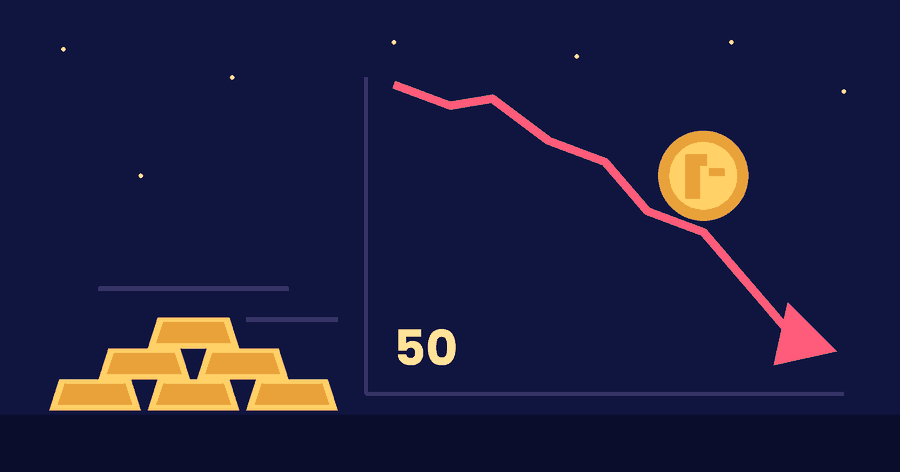
Turkish lira crosses 50 per dollar
The USD/TRY rate reached 50.02 on Wednesday, Nov. 4, according to Caspian Post, citing TradingView data. It first passed 49 in September. The move followed data showing annual inflation rose to 29.8% in October, above the 29.5% analysts expected.
Turkish authorities are letting the lira weaken at a faster but controlled pace to avoid a sharper fall later, Central Bank Governor Fatih Karahan said in October, as reported by Bloomberg. The central bank cut its policy rate by 100 basis points to 36% at its October meeting, its first cut since the war with Iran began. Karahan is due to present updated inflation forecasts on Nov. 12.
If you think your investment decisions are bad…🇹🇷 Turkey has sold $36 billion in gold and foreign reserves this year to protect its currency, the Lira.And the Lira chart looks like this. https://t.co/hUVTkxUlAD
— Ash Crypto (@AshCrypto) November 7, 2026
Market participants surveyed by the central bank expect about 51.5 per dollar by year-end, while Goldman Sachs, Deutsche Bank and Commerzbank see 52 or more, 1news.az reported.
What the $36 billion claim gets right and what it leaves out
The pressure began when the US-Israel war on Iran started on Feb. 28 and sent energy prices higher. Between late February and late March, the central bank sold more than $26 billion in foreign currency, according to Bloomberg and Reuters data cited by Forbes. It also reduced its gold holdings by about 58 to 60 tonnes, worth more than $8 billion, in two weeks.
Only part of that gold was sold outright. Economist estimates put outright sales at about 22 tonnes, with 34 to 36 tonnes moved through swaps, according to Turkish Minute. Swaps are temporary deals that use gold as collateral for foreign currency, and the central bank must reverse them. Adding swaps to sales can therefore overstate the permanent loss.
Together, the March figures come to roughly $34 billion, which makes $36 billion for the year plausible in size. We found no source that adds up reserve sales for the full year, so treat the number as unconfirmed.
Reserves have fallen again
Gross foreign exchange reserves, which exclude gold, fell by about $3 billion to $56.09 billion in the week ending Oct. 30, the lowest since late June, according to central bank data reported by Investing.com. That was the third straight weekly fall, and reserves are down nearly 25% since the start of the year. Net international reserves dropped to $38.01 billion, the lowest since March 27.
Turkey’s companies are also heavily exposed. Forbes cited central bank data showing the private sector’s net foreign currency short position stood at $197.6 billion when the war began, the highest in eight years.
Why crypto traders are watching
Turkey ranked 14th in Chainalysis’s 2025 Global Crypto Adoption Index, as cited by a KuCoin summary. Stablecoins make up most of the crypto bought with lira, and USDT/TRY trading volume on domestic exchanges runs at about 10 times that of BTC/TRY, according to Spark’s research. Many users hold dollar-linked tokens to protect savings from inflation.
Ripple said on June 2 that its RLUSD stablecoin is available through three Turkish partners, BiLira, Bitexen and Bitlo, as it seeks a share of a market dominated by USDT and USDC.
You might also like: Russia central bank approves Bitcoin, Ether and USDT trading for retail investors
What to watch next
- The central bank’s updated inflation forecasts on Nov. 12.
- Next week’s reserve data, to see whether the fall continues.
- Whether the lira reaches the 51.5 to 52 range forecast for year-end.
- Any unwinding of the gold swaps, which would return gold to reserves.
Read more: Binance vs Coinbase (2026): fees, safety and which is better
This article is for information only and is not investment advice. Exchange rates and reserve data change frequently.